What was released
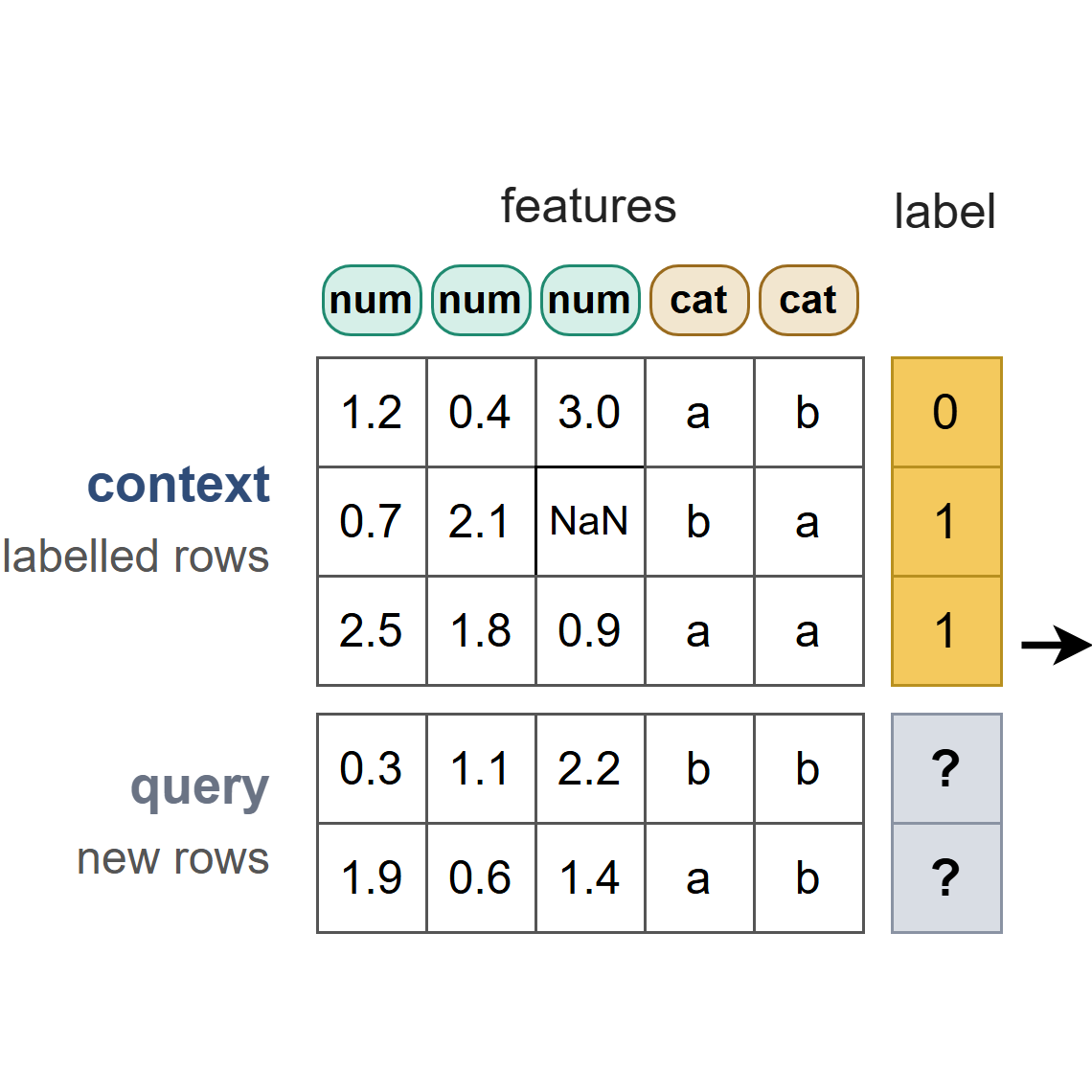
On September 29, NVIDIA introduced Kumo Tabular, a model for predictions from tables. Official weights in three sizes are available on Hugging Face, and the `structured-data-models` library is on GitHub. The model takes rows with known outcomes as context and predicts a class or numeric value for new rows without training a separate model for every new dataset. This is not a chatbot or a report writer: the tasks are tabular classification and regression.
For a small business, a practical use is to test whether it can build a forecast faster from existing CRM, order, or support records: for example, the probability that an order will be delayed or a customer will leave. This requires historical rows with reliable target labels, not simply an export of every Excel column. Unnecessary personal data should be excluded.
What is confirmed and what remains to be proved
The model repository contains `small`, `medium`, and `large` directories; NVIDIA specifies a 28-million to 215-million-parameter range. The repository code is under Apache 2.0, while the weights use OpenMDW 1.1, which permits commercial use subject to its terms. These are different licenses; distributing the weights requires retaining the license text and applicable origin notices. The model-card example uses CUDA, and the official library documentation describes it as GPU-native. Do not promise that it will run on an office laptop without checking the specific hardware.
NVIDIA reports strong scores on several public benchmarks. These are the developer's claims, not measured return on investment for a Russian company. Independent TabArena research notes that gradient-boosted trees remain strong contenders on practical tabular datasets. NVIDIA's announcement itself warns that accuracy can degrade when query rows differ from context rows or the table is far outside the training ranges. A baseline comparison with CatBoost or another familiar method on a company's own held-out time period is essential.
A quick management takeaway
Kumo Tabular is an additional pilot candidate when labeled history and suitable GPU capacity already exist. Compare quality on a recent held-out month, probability calibration, running cost, and analyst time—not a promotional leaderboard position. If the target label is missing or the business process has changed, a new model will not turn the data into a reliable prediction by itself. The official diagram on the cover shows the input: rows with known labels and rows requiring a prediction.