What changed
On 5 October 2026, the llama.cpp project released version 0.6.0. This is an update to a local inference engine, not a new model or a ready-made system for corporate documents. The official release notes list the extended `llama_batch_ext` batch API and `llama_process()` call, support for additional architectures, server changes, and a reworked web interface.
For smaller teams, the server changes are the most actionable. `GET /v1/models` and `GET /models` now report a model's input and output modalities in an `architecture` object. The `/v1/embeddings` endpoint accepts typed content, including images, audio, and video. The interface gains a new model-download pipeline and an estimate of whether a model fits available memory. These changes may simplify a trial of local search over multimodal material, but they do not replace access controls, retrieval-quality checks, or audit logging.
Business implications
If a company already runs llama.cpp as a local RAG server, version 0.6.0 deserves a separate test environment. Client applications may depend on the previous response shape, while the extended batch API matters to teams embedding the engine at the C/C++ level. The release also increments session and sequence-state format versions: saved states and recovery procedures should be tested against the company's own workload before updating a production server.
The release's support for the 320-billion-parameter GLM-5.3-Flash does not mean that model fits a typical office server. Engine-level architecture support proves neither sufficient memory nor Russian-language quality, the weights' license, or the economics of a specific business process. Those questions must be checked separately for the model selected.
A practical next step
Build a small staging setup: record the current version, model, and settings, then run the same set of representative requests, including difficult documents and access-denied cases. Compare answer quality, latency, memory use, and existing integrations. If models are downloaded through the interface, check network rules and weight licenses separately. Move the update into production only after that comparison, not on the strength of a version number alone.
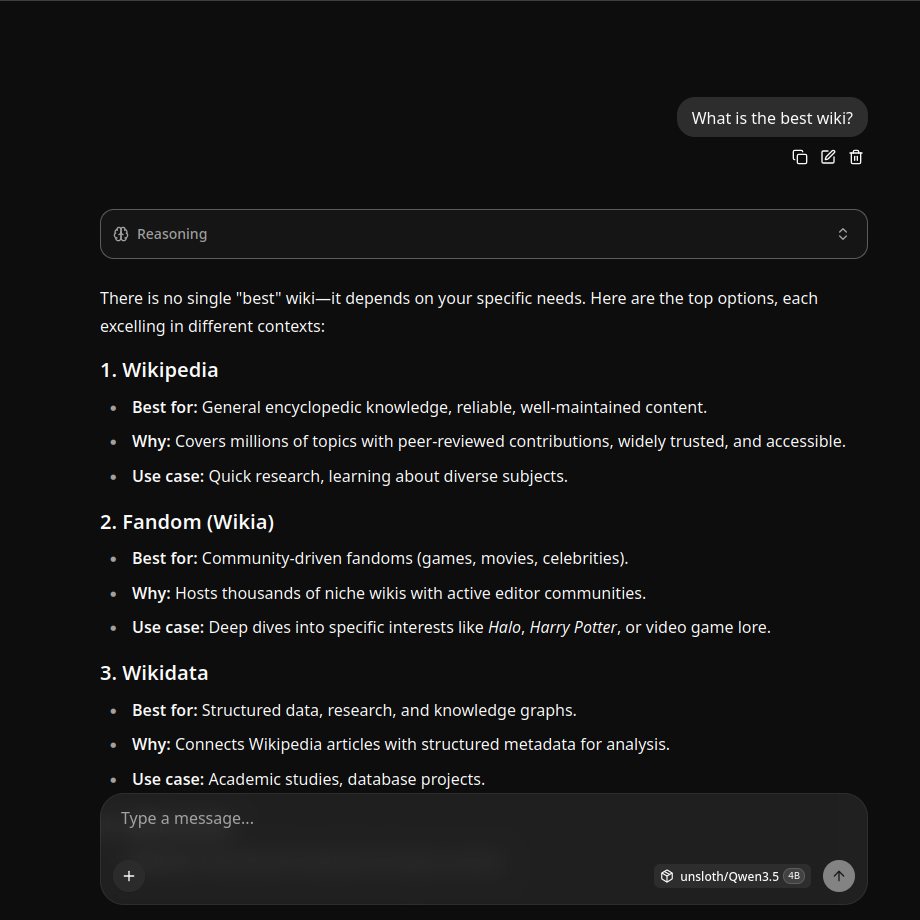
The illustration is an archival screenshot of the llama.cpp interface from March 2026. It shows the product, not the interface changes in version 0.6.0.