The idea was not “AI for AI’s sake”
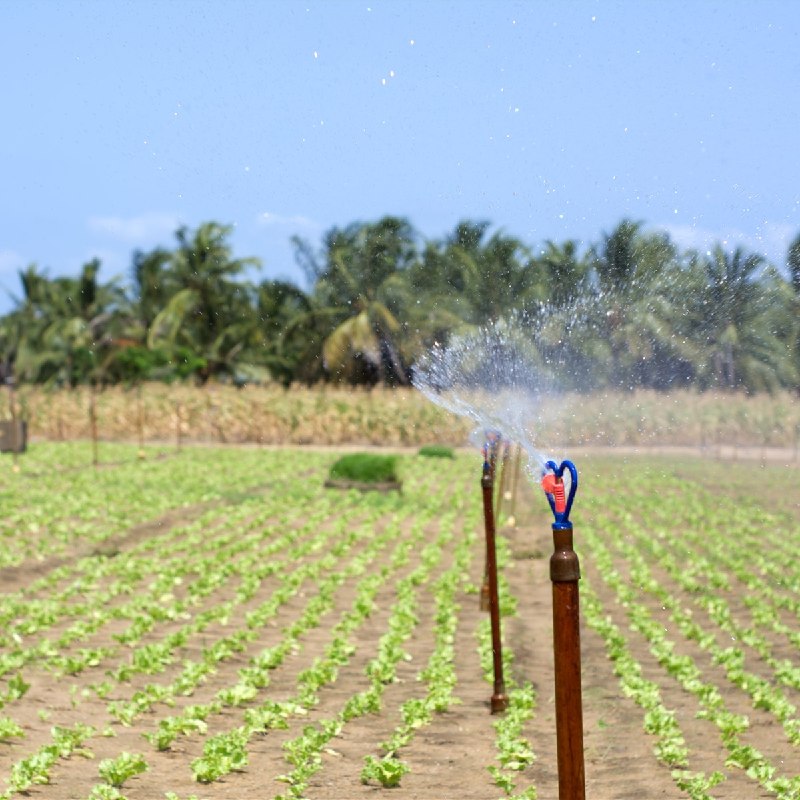
An Italian agritech SME already had access to satellite-derived data, weather information and soil-related data. Its challenge was to turn descriptive vegetation and soil-moisture maps into practical daily irrigation recommendations for individual fields. The team needed to establish whether those sources could be combined with agronomic and physical models, analytics and possibly AI.
The company engaged ER2Digit, a European Digital Innovation Hub, for a “test before invest” service. According to the published case, the six-month expert engagement was valued at €4,255.33. This was the cost of feasibility work and roadmap preparation—not a verified water saving or a measured result from a deployed system.
What happened before development
The team examined the available data and business need, compared options and prepared a path for further experimentation. The roadmap covered data ingestion and preprocessing, a possible modular architecture, validation logic, risks and next steps. The options included physical modelling, AI modules for forecasting and anomaly detection, and potential use of high-performance computing infrastructure.
The important takeaway is that the first-stage result was an investment-ready roadmap, not a promise that a model would immediately reduce water use. The source provides no measured reduction in water consumption. Such an outcome would require later field trials against a defined baseline.
How a small business can use the same sequence
Before choosing a model, a company can:
- describe the decision employees need to make and the cost of an incorrect decision;
- check data completeness, update frequency and geographic accuracy;
- compare AI with physical or conventional analytical models;
- define a control period and baseline metric in advance;
- estimate integration, monitoring and support costs—not only compute.
For irrigation, a pilot could begin on one field. Record the current agronomist’s recommendations, actual weather, soil moisture and outcomes such as water use and plant condition. The new system should first run in parallel with the established process. A specialist can compare its recommendations and explain discrepancies. Only after testing different crops and conditions should the company consider automation.
Important limitations
Satellite coverage, cloud cover, sensor quality, soil characteristics and crop-specific factors all affect data suitability. A recommendation system does not replace agronomic responsibility and may require human review. High-performance computing may not be needed at all; that should be established by comparing options rather than assumed in the initial budget.
A practical next step
An SME can run a short pre-project assessment: assemble representative data, describe the decision and define a success criterion. The output should include missing data, an architecture option, an experiment plan, a pilot budget and conditions under which the project should be stopped.